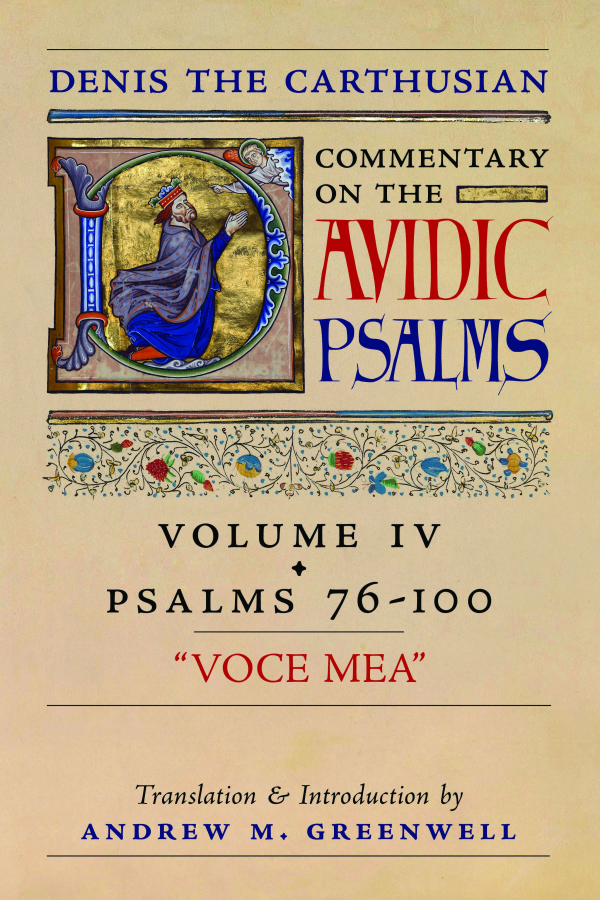
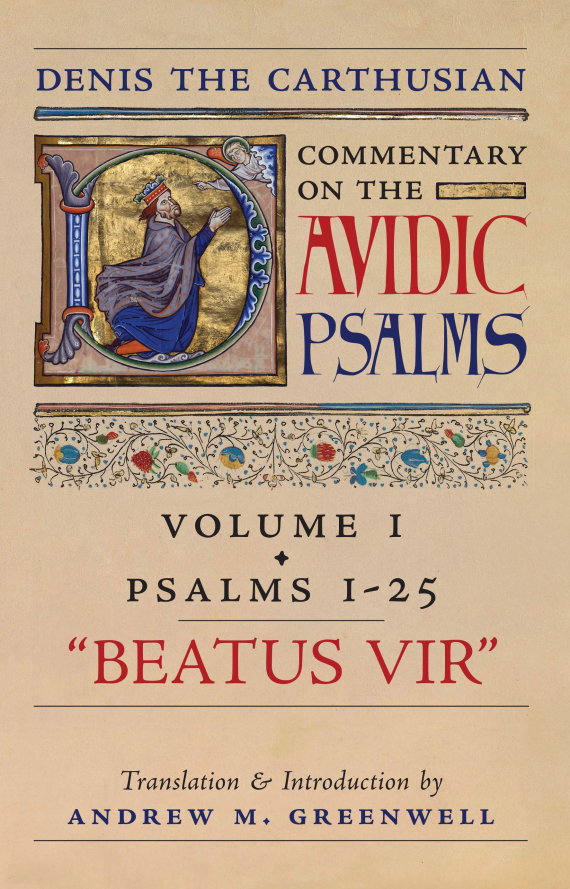
Denis the Carthusian's Commentary on the Psalms (Vol. 1—Psalms 1–25): Beatus Vir...
Beatus Vir, the first of six planned volumes translating Denis the Carthusian’s (1402–1471) extensive Com...
View Book →


“I cried to the Lord with my voice; to God with my voice, and he gave ear to me.”
Voce Mea, the fourth volume of the first ever English translation of the Commentary on the Davidic Psalms by Denis the Carthusian (1402–1471), continues with Denis’s literal, allegorical, tropological and analogical traversal through the entire 150 Psalms. This volume covers Psalms 76 through 100. St. Jerome exclaimed that “ignorance of Scripture is ignorance of Christ,” and Denis heartily agreed.
Indeed, outside of the Gospels, Denis maintains that the voice of Christ, the vox Christi, is found most strongly in the Psalms, though moderns, for a variety of reasons, appear to have developed a tin ear to it. Denis is the perfect antidote to this auditory malaise.
Armed with a keen spiritual ear which is only sharpened by his contemplative spirit and his love for God, Denis identifies Christ’s voice for us in the Psalms and amplifies it in his Commentary so that we might hear it above the din of those things which distract or deafen us to it, and might say with Samuel: “Speak, Lord, for your servant hears.” (1 Sam. 3:10)
The literal sense establishes what the sacred text says; the spiritual senses reveal Christ, form the Christian in charity, and direct hope toward eternal life.
The historical and textual meaning that provides the necessary foundation for interpreting the Psalm.
The mysteries of Christ, His Church, and the economy of salvation signified in the sacred text.
The moral sense by which the Psalm teaches virtue, conversion, charity, and the imitation of Christ.
The sense that raises the mind toward heavenly realities, eternal happiness, and union with God.
Denis’s Christological reading discloses the many voices contained within the sacred text: the voice of David, the voice of Christ, Christ speaking to the Father, Christ addressing His people, and Scripture speaking concerning Christ.
These twenty-five Psalms move through lament, remembrance, judgment, restoration, pilgrimage, divine protection, and praise. They recall God’s works in the history of Israel, mourn the desolation of Jerusalem, celebrate the beauty of His dwelling place, and proclaim His sovereign rule over all the earth.
The sequence begins with a voice crying to God in tribulation and advances toward the confident praise of the Lord as king and judge. Denis follows each movement from its historical setting toward Christ and the Church, and then inward toward the conversion, perseverance, and hope of the Christian soul.
Andrew M. Greenwell’s introduction explores Denis’s recurring expression verbum bonae spei—the “word of good hope.” The expression describes supernatural theological hope: the virtue by which the Christian relies upon God’s help and looks toward eternal happiness in Him. Mere optimism and natural expectation cannot attain this divine object.
Christian hope rests upon divine assistance. It is given and preserved by God, has God as its object, and leads the soul toward God as its end.
Charity gives life and form to the word of good hope. Love of God, conversion of life, obedience, humility, and perseverance distinguish it from presumption.
Prayer teaches the soul to distrust its own strength, seek refuge in divine mercy, and confide in the Lord as helper and protector.
“Man needs God, otherwise, he remains without hope.”Pope Benedict XVI, Spe salvi
Denis explains the Psalms from the most sound Scriptures of the Old and New Testaments. Passage illuminates passage, revealing the unity of divine revelation and the many ways in which the Psalter anticipates, proclaims, and interprets the mystery of Christ.
His exegesis is guided by the speculative theology of St. Thomas Aquinas, enriched by the mystical inheritance of Dionysius the Areopagite, and given a distinctly contemplative character by his Carthusian vocation.
For Denis, the Psalms nourish the word of good hope when they are prayed in Christ: with confidence in God’s promises, reliance upon His mercy, fidelity to His commandments, and desire for the eternal joy promised to those who love Him. Commentary therefore leads beyond understanding into confession, thanksgiving, praise, conversion, and prayer.
Denis the Carthusian (1402–1471), known as the Doctor ecstaticus, was among the most prolific and erudite theological writers of the later Middle Ages. His work unites the inheritance of patristic and medieval exegesis with Thomistic theology and the contemplative spirituality of the Carthusian Order.
Andrew M. Greenwell is a Catholic layman, father of three, and grandfather of four. A civil trial and appellate lawyer based in Corpus Christi, Texas, he has written for Catholic Online and for a number of years maintained Lex Christianorum, a blog devoted to the natural moral law.
He has translated works from German, Latin, French, and Italian into English and is a member of the Latin Mass Community at St. John the Baptist Church in Corpus Christi. Angelico Press is publishing his translations of Denis the Carthusian’s works on the Mass and the Eucharist.
The voice of Christ heard in the Psalms, the soul strengthened in hope, and sacred doctrine brought to prayer.
Six voices in praise of Denis’s Christological exposition of the Psalms and Andrew M. Greenwell’s English translation.
Volume Four of Andrew Greenwell’s English translation of Denis the Carthusian’s Commentary on the Psalms is a remarkable achievement, offering wide access to a text of great importance. Denis’ erudition, insight and originality, as well as his refined ability to keep various interlocutors in view are robustly displayed. Readers will find his attention to the relationship between the letter of history and the spiritual senses particularly engaging.
The wealth of helpful notes in this edition will help us all gain a deeper appreciation for the workings of one of the late medieval world’s most respected voices. A translator has to share something of the spirit of the original author, and this translation is the work of one who certainly does.
In this impeccably well-done translation from Latin of the beautiful commentary on Psalms 76–100 of Denis the Carthusian, Andrew Greenwell has demonstrated that he is precisely the kind of layman Pope St. John Paul II called for in his 1988 post-synodal apostolic exhortation to the lay faithful. He is in love with the Lord Jesus Christ and totally given over to the service of His Mystical Body, the Church. I highly recommend this beautiful work.
I am deeply grateful to Andrew for offering it to all of us as a resource.
Greenwell’s welcome translation of Denis the Carthusian’s first major work is a gift to those who seek primarily to understand the Psalms in the context of revelation and faith above the narrower priorities of modern academia. Denis’ richly Christological exposition of each psalm, applying the four senses of scripture, is witness to Carthusian life faithfully and fruitfully lived.
We can find no better prayers than the ones God Himself has given us. The Psalms are the heart of Holy Scripture, the summary of all its treasures, the daily bread of Christ’s faithful. The mysteries contained in the Psalms are simple, and yet so sublime, that we need a guide to open up the Scriptures to us. Denis the Carthusian, a fine connoisseur of the Psalms, is an exemplary guide. This English translation is a remarkable accomplishment, for which we are all indebted to Andrew Greenwell.
Now here is a treasure that those who take their lectio divina seriously appreciate beyond telling: Denis the Carthusian’s commentary on the Psalms—no less!
This Commentary is an important aid in studying, indeed in praying, the psalms—which form so much of the very fibre of the Sacred Liturgy—according to the medieval mind. The translator and publisher are to be congratulated for making available this jewel of our tradition in the English language and in such an elegant edition.
If lectio divina is nothing other than listening to the voice of God through the words of His friends, amongst whom Denis the Carthusian must surely be counted, this fruit of the lifetime of faith, seeking and understanding of the Doctor ecstaticus is a most beautiful gift for those who would hear His voice speaking through the psalms today.
Be the first to write a review for this product.
Beatus Vir, the first of six planned volumes translating Denis the Carthusian’s (1402–1471) extensive Com...
View Book →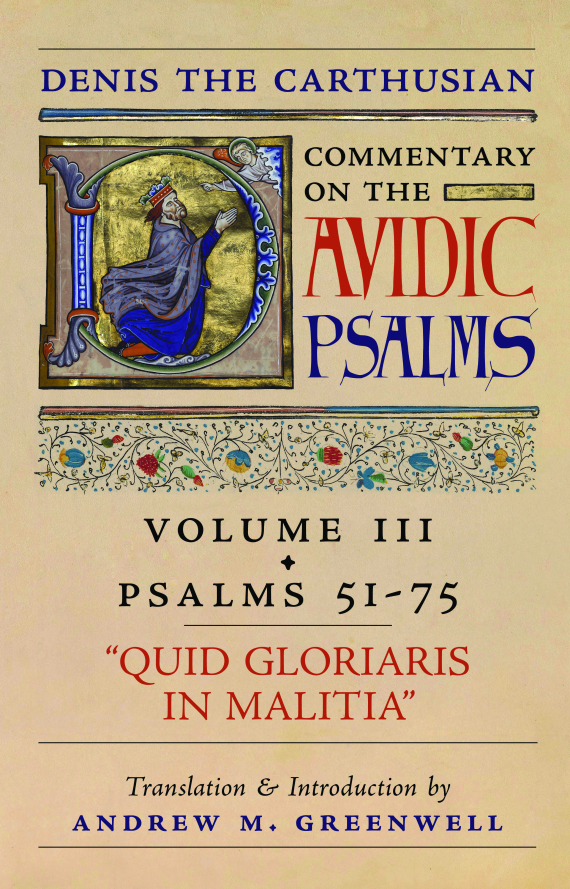
QUID GLORIARIS IN MALITIA, the third of six anticipated volumes translating Denis the Carthusian’s (1402–1471) entire Co...
View Book →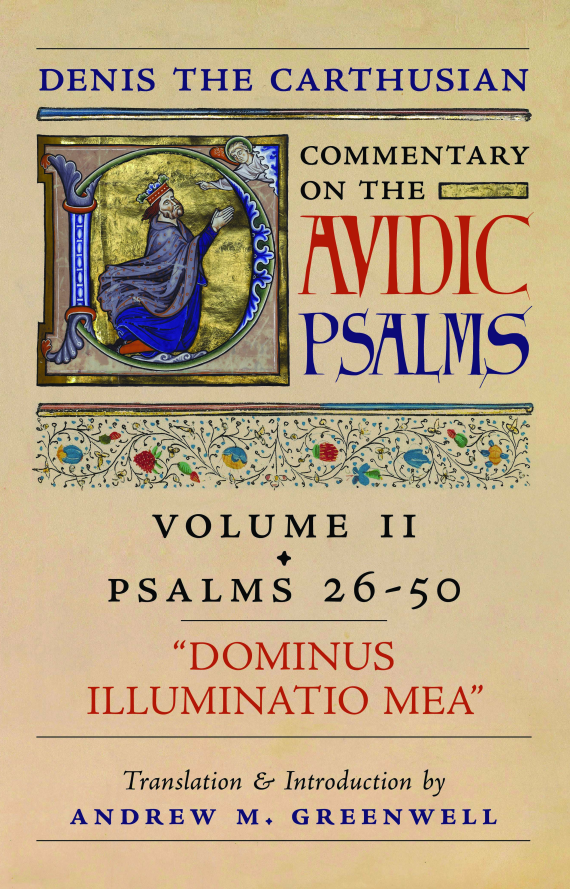
Dominus Illuminatio Mea is the second of six planned volumes translating Denis the Carthusian’s (1402–1471) extensive Co...
View Book →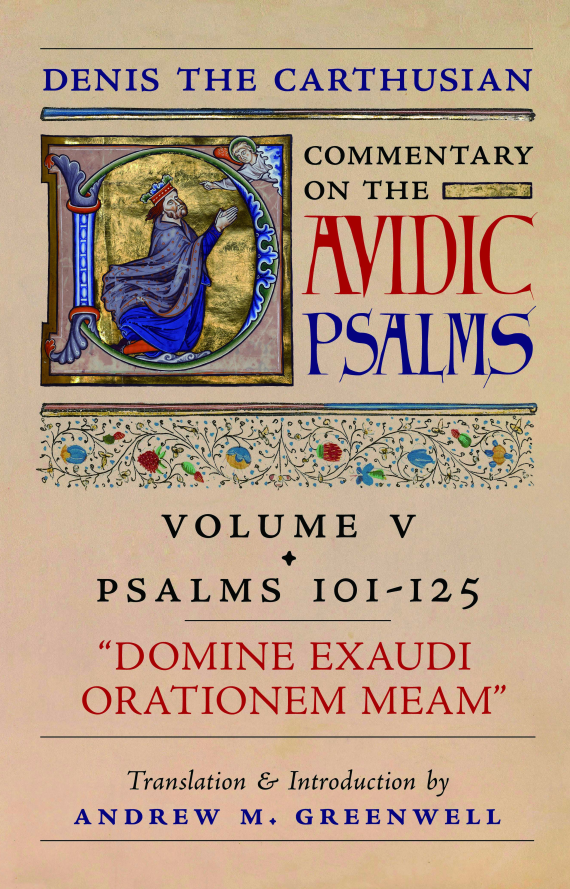
Denis the Carthusian · Commentary on the Davidic Psalms · Volume V ✠ ❦ ✠ Domine Exaudi ...
View Book →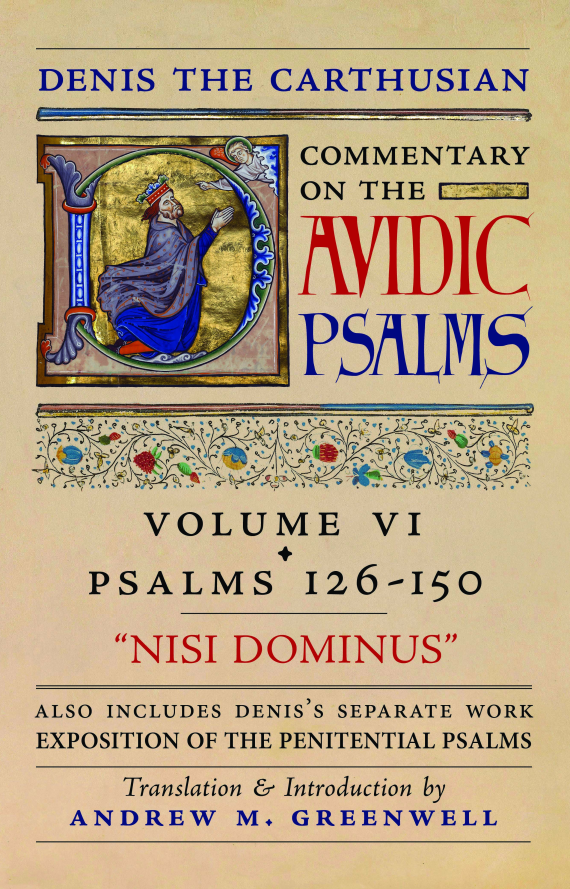
Denis the Carthusian · Commentary on the Davidic Psalms · Volume VI ✠ ❦ ✠ Nisi Dominus Commentary...
View Book →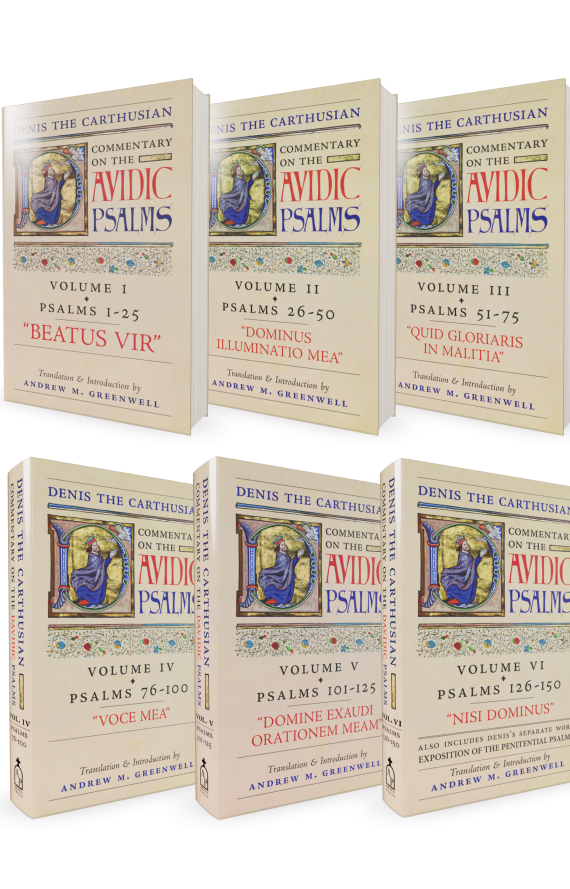
The First Complete English Translation Commentary on the Psalms The Complete Six-Volume Set Denis the Carthusia...
View Book →
Receive updates on new releases, special offers, and notable developments from Arouca Press.