

-570x889.png "Intelligence in Danger of Death")
Intelligence in Danger of Death...
✦ ✦ ✦ Intelligence in Danger of Death by Marcel De Corte · Translated by Brian Welter · Introduction by Miguel Ayu...
View Book →


Insofar as the four cardinal virtues—prudence, justice, fortitude, and temperance—are remembered today, it is in a distorted and partial fashion. Yet the resulting void is at the root of the evils of the “dis-society” in which we live: totalitarianism, unbridled capitalism, social alienation, consumerism, hedonism, and the unchallenged reign of technology. To return to sanity, we need prudence, the virtue directing all the others and indispensable for the determination of appropriate personal and societal actions; justice, particularly essential for the pursuit of the common good; fortitude, required for fidelity to commitments and the sacrifices these entail; and temperance, applying to all moderation in conduct, not just regarding food and drink. Without the recovery of these virtues, the collapse of what remains of our civilization cannot be prevented. The Belgian philosopher Marcel De Corte is a prophetic voice heralding the coming chaos, basing his analyses on Aristotle and St. Thomas Aquinas. His prognosis for the future, however, does not leave us without hope.
The need for moral realism
For De Corte, the virtues are not decorative moral ideals. They are the habits by which man becomes capable of acting according to reality, reason, and the common good.
For Aristotle and St. Thomas, prudence is the most important characteristic in a man. It is what makes him a man in the full sense of the term.
Prudence
Unity among citizens is the common good par excellence, and this unity is only possible if each renders unto others in society (ad alium in communi) what is due them.
Justice
In contradistinction, fortitude no longer exists as a virtue ordered towards the good.
Fortitude
The wages of sin remain ever present, and nowhere more than in the realm where pleasure reigns.
Temperance
It is in this way, and not otherwise, that sound morals can continue, beyond the fleeting existence of individual morality in a society.
Conformity to Reality
Thus, justice, the queen of all the virtues, will be restored.
Justice
Why read it?
Because the modern crisis is not merely institutional, political, or economic. It is moral and metaphysical: a crisis in man’s capacity to see reality, judge rightly, act justly, endure nobly, and live with measure.
Who is it for?
Readers of Catholic philosophy, Thomistic moral theology, social thought, political philosophy, and anyone seeking a serious account of how virtue sustains civilization.
Prudence
The directing virtue without which action becomes impulse, ideology, or calculation.
Justice
The virtue by which personal right and the common good are restored to their proper order.
Fortitude
The virtue that permits loyalty, sacrifice, endurance, and greatness of soul amid trial.
Temperance
The virtue that restrains excess and restores measure to the whole of conduct.
“For centuries, since the moral insights of Plato and Aristotle, the virtues were considered as the heart of morality.”
—Thomas Storck
Marcel De Corte was born in Belgium in 1905 and died in 1994. A philosopher and heir to the great Aristotelian tradition, he taught at the University of Liège until 1975.
His philosophical work attends especially to the moral and social disintegration of modern man after the French and Industrial Revolutions.
Realism
Humble before the objective order of persons and things.
Counterrevolution
A major Catholic witness against the derangements of modernity.
Virtue
A recovery of the moral architecture of man and society.
Anti-modernism
Philosophical realism placed against the illusions of the modern world.
Be the first to write a review for this product.
✦ ✦ ✦ Intelligence in Danger of Death by Marcel De Corte · Translated by Brian Welter · Introduction by Miguel Ayu...
View Book →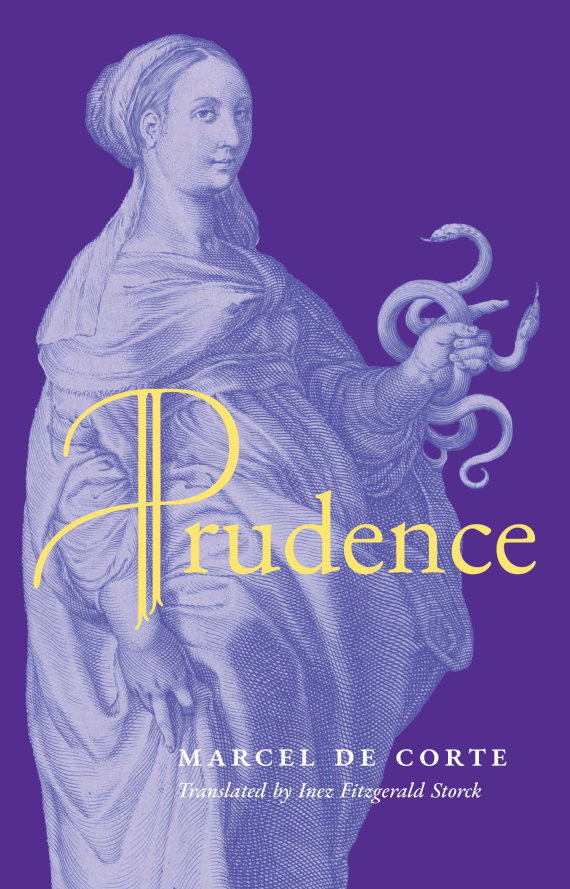
We are made to be happy, to experience eternal beatitude, the face-to-face vision of God. And we attain to this happines...
View Book →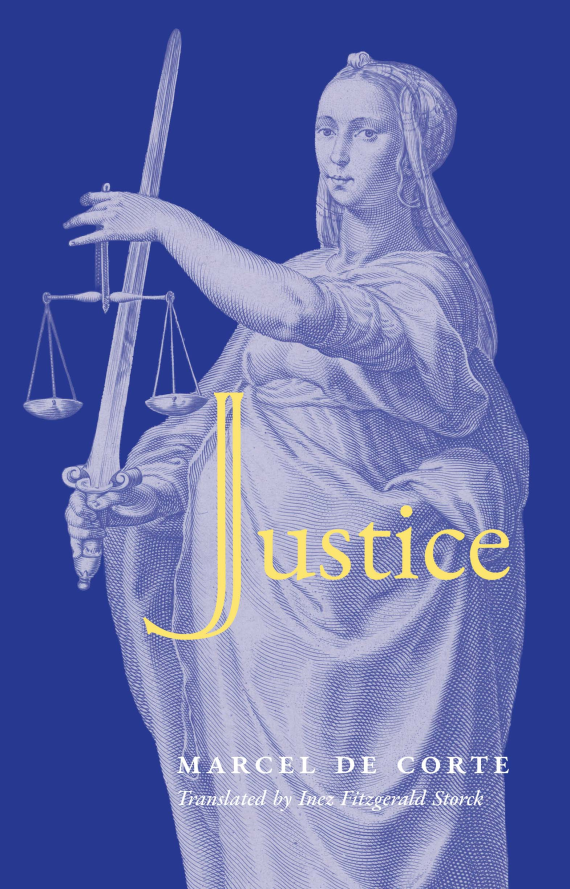
Today's world is rocked by claims and counter-claims made by the most diverse groups. The result is ideological conflict...
View Book →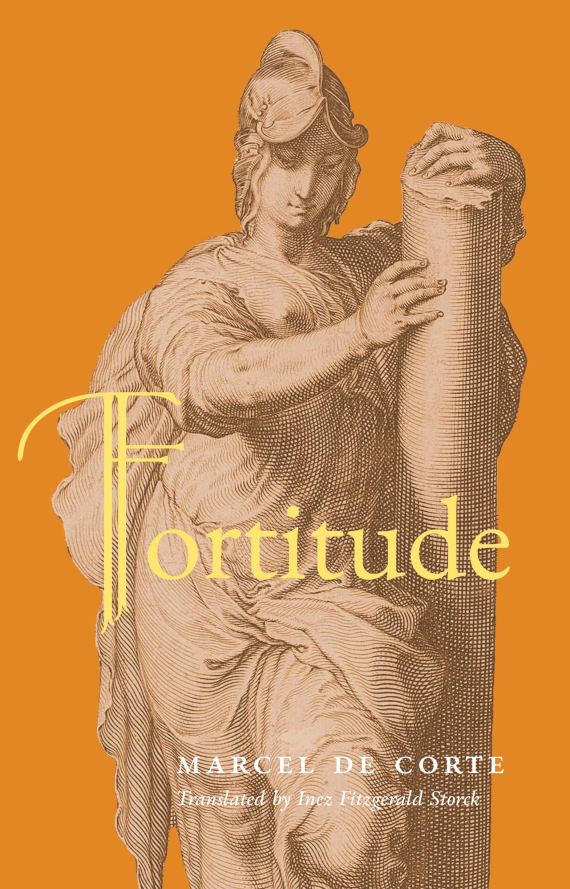
Insofar as the four cardinal virtues, prudence, justice, fortitude, and temperance, are remembered today, it is in a dis...
View Book →
Temperance has faded from modern consciousness as a virtue, relegated, when it is mentioned at all, to moderation in foo...
View Book →
Receive updates on new releases, special offers, and notable developments from Arouca Press.