
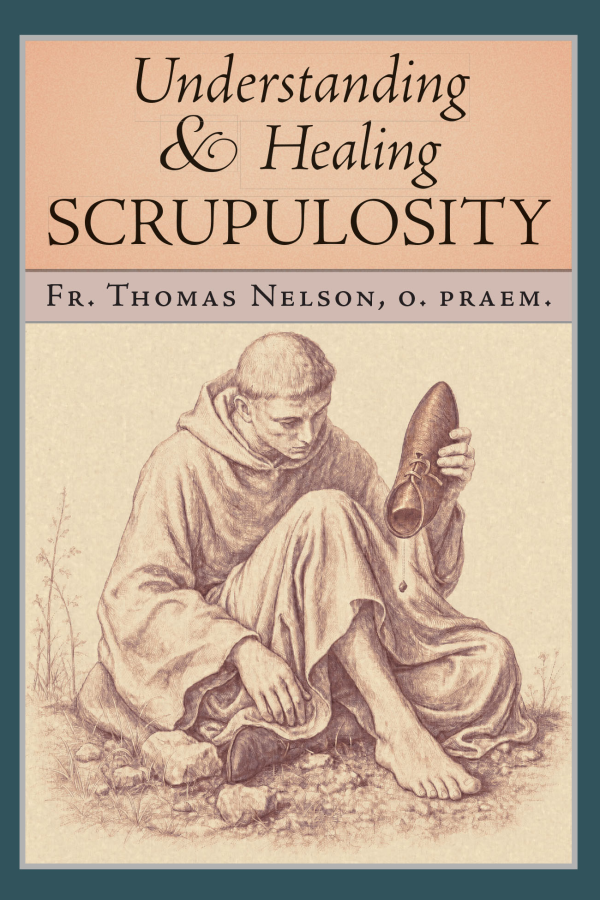
- Product Code: uhs
- Publication date: Late November 2026
- Pages: 98
- Size: 4.5 x 6.5
-
Table of Contents
Introduction 1 Chapter 1: What Scrupulosity Is and Is Not 3 Chapter 2: Discerning the Spirit in Scrupulosity 9 I. Scrupulosity and the Divine Spirit 10 II. Scrupulosity and the Diabolical Spirit 14 III. Scrupulosity and the Human Spirit 16 A. Pharisaical Scrupulosity 17 B. Neurotic Scrupulosity 20 Chapter 3: The Origin of Neurotic Scrupulosity 23 I. A Thomistic Perspective of the Human Person 24 II. The Repressive Process and Neurotic Scrupulosity in the Light of Thomistic Anthropology 28 III. The Formation of Conscience and Scrupulosity 37 A. Stages in the Formation of Conscience 37 B. Four Qualities of Good Moral Formation 45 Chapter 4: Thomistic Evaluation & Remedy 55 I. Emotional Control Through the Virtues 55 A. Navigating Sorrow 57 B. Fear and Hope 62 C. Fortitude and the Use of Anger 66 D. How to Arouse Anger 68 II. The Role of the Infused Virtues and Meditation 69 Chapter 5: Synthesis 73 Conclusion 85 About the Author 87 -
![Fr. Thomas Nelson, O.Praem.]()
-
Reviews (0)
0 reviews
Be the first to write a review for this product.
Write a review
Scrupulosity is an affliction many people suffer. It is a wound in the conscience, the very heart of a person where he encounters God. It can color the face of God and make him look like a tyrant ready to punish instead of a loving Father who comforts and heals. It is an affliction difficult to understand and even more difficult to heal. This small book is an attempt to understand scrupulosity, its various types and origins. It does not provide a psychological or therapeutic solution to the problem of scrupulosity but it does propose a moral remedy based on the thought of St. Thomas Aquinas.
A Fine Hardcover Edition
Beautifully presented in hardcover with a dust jacket, this edition features traditional sewn binding for lasting durability and an elegantly foil-stamped title. These carefully chosen finishing details give the book a distinguished and enduring appearance, befitting a work of spiritual and theological reflection.
From the Pages of the Book
Selected Passages
“Scruples are like little, sharp pebbles torturing the conscience of a person, hindering his steps toward God.”
— Introduction, p. 1
“The scrupulous conscience is motivated by fear and anxiety, while the delicate conscience is motivated by a filial fear of God which is rational, without being anxious.”
— Chapter 1, p. 7
“The most important quality of good moral formation is love. Everyone has a natural desire to be loved.”
— Chapter 3, p. 50
“Weariness of spirit needs a kind of repose which is found in cheerfulness of spirit. Therefore, the universal remedy for scrupulosity is cheerfulness.”
— Chapter 4, p. 57
“The remedy for scrupulosity is to strengthen hope. Hope feeds fortitude, which is the virtue regulating fear.”
— Chapter 4, p. 63