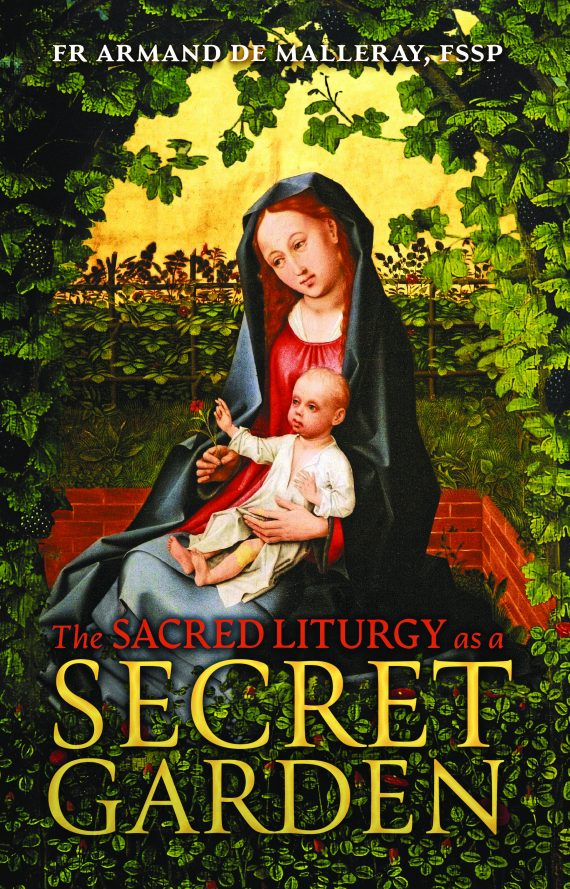
The Sacred Liturgy as a Secret Garden...
Also available at Amazon UK and other international retailers. The well-known children’s story The Secr...
View Book →



Arouca Press
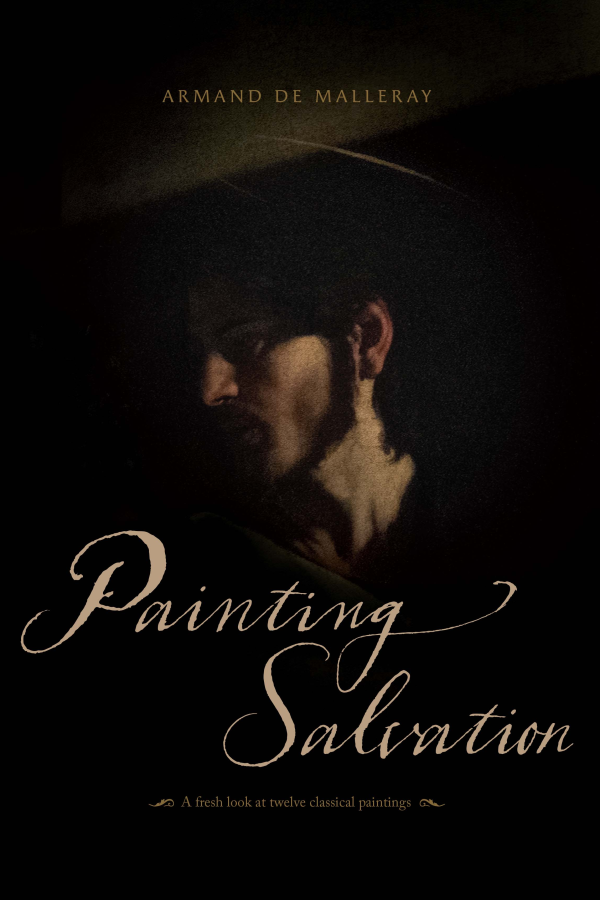
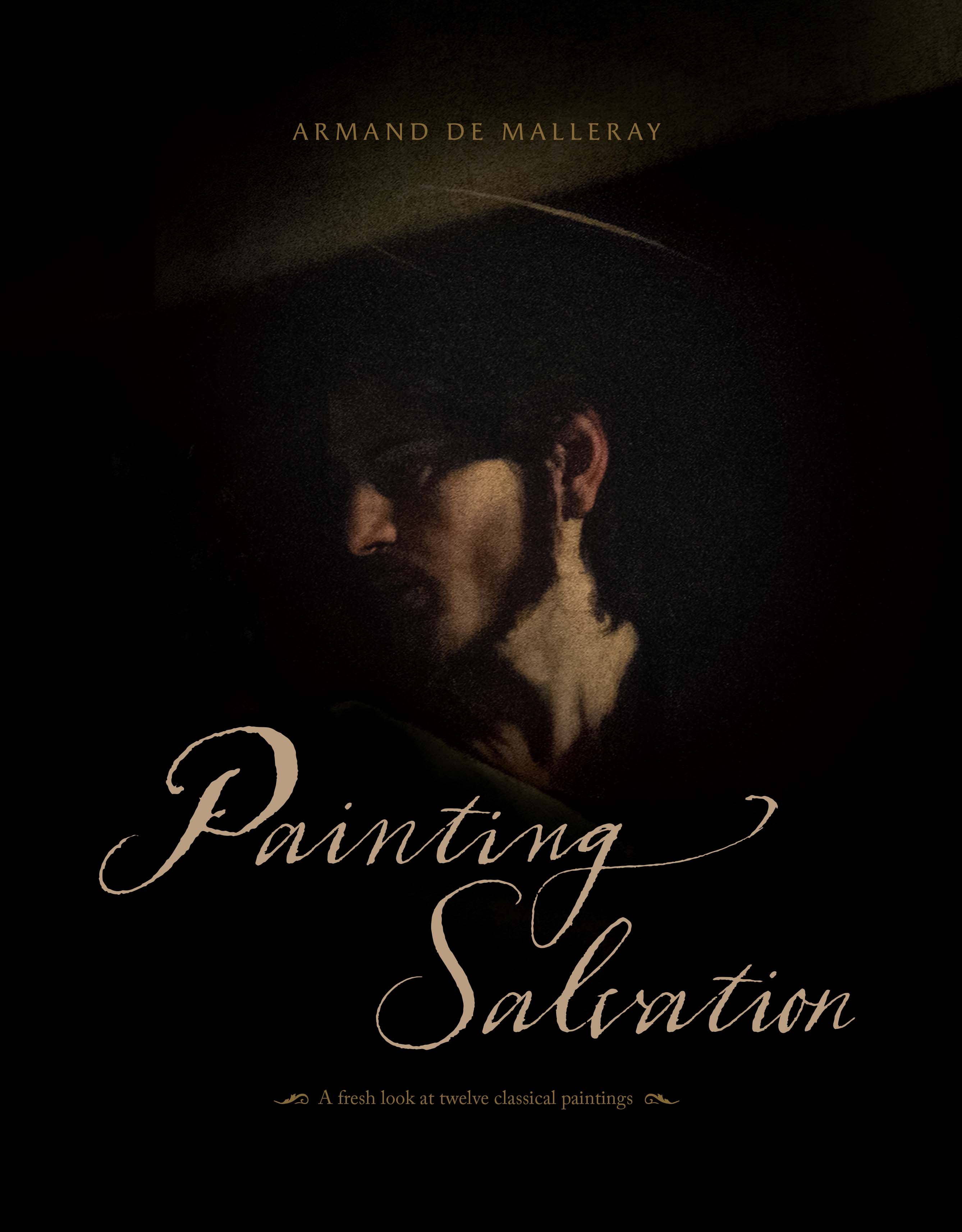
A fresh look at twelve classical paintings
By Armand de Malleray, FSSP
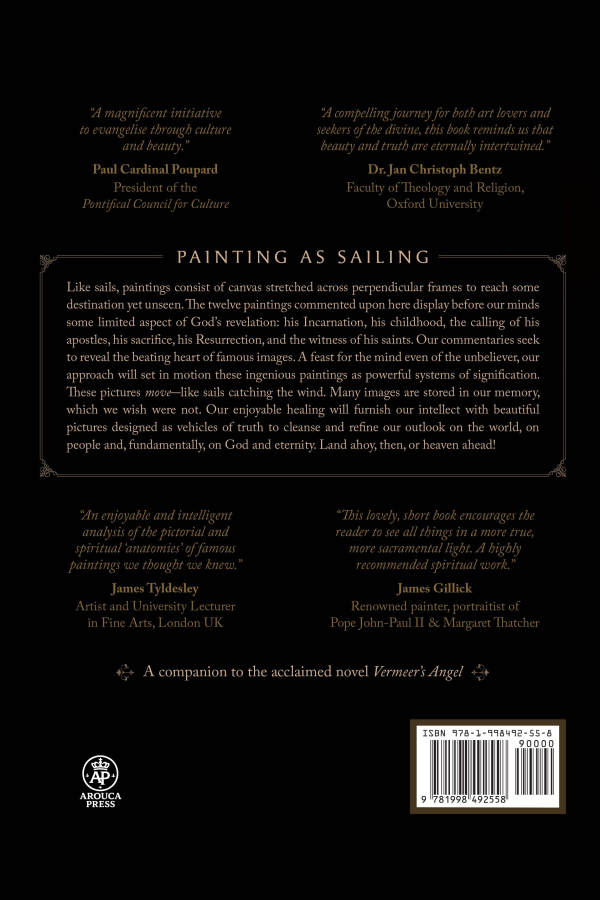
Like sails, paintings consist of canvas stretched across perpendicular frames to reach some destination yet unseen. The twelve paintings commented upon here display before our minds some limited aspect of God's revelation: his Incarnation, his childhood, the calling of his apostles, his sacrifice, his Resurrection, and the witness of his saints. Our commentaries seek to reveal the beating heart of famous images. A feast for the mind even of the unbeliever, our approach will set in motion these ingenious paintings as powerful systems of signification. These pictures move—like sails catching the wind.
Many images are stored in our memory, which we wish were not. Our enjoyable healing will furnish our intellect with beautiful pictures designed as vehicles of truth to cleanse and refine our outlook on the world, on people and, fundamentally, on God and eternity. Land ahoy, then, or heaven ahead!
Please note: The print edition will take about 10 days to ship out once it is ordered from the Arouca Press link. Thank you for your patience!
1. John Hill
Interior of the Carpenter’s Shop at Forty Hill, Enfield
2. Raphael
The Marriage of the Virgin
3. Georges de La Tour
The Adoration of the Shepherds
4. Georges de La Tour
Saint Joseph the Carpenter
5. Caravaggio
The Calling of Saint Matthew
6. Michelangelo
The Entombment
7. Titian
Noli Me Tangere
8. Caravaggio
The Breaking of Bread at Emmaus
9. Caravaggio
The Crucifixion of Saint Peter
10. Georges de La Tour
Saint Sebastian tended by Saint Irene
11. Vermeer
Woman Holding a Balance
12. Claude Lorrain
Seaport at Sunset
View sample interior pages from the book. Each link opens the page image in a new tab.
Review by Angeline Tan (Rorate Cæli).
“Painting Salvation is an edifying devotional aid that encourages the reader to look more deeply at sacred art, not merely as beautiful cultural inheritance, but as a means of contemplating the mysteries of Christ and the truths of the Catholic faith.”
“Fr. de Malleray’s reflections help restore the link between beauty and salvation, showing how Christian art can form the imagination, elevate the mind, and draw the soul toward God.”
Review by Dr. Jan C. Bentz: The meaning behind the masterpiece (The Catholic Herald).
Read the review at The Catholic Herald →
Painting Salvation: A Fresh Look at Twelve Classical Paintings by Armand de Malleray FSSP (Arouca Press, 216pp)
Sacred art more often than not suffers a curious fate: admired for its beauty, studied for its history and classified for its symbolism, it is frequently approached through almost every lens except the one that originally gave it life. In Painting Salvation, Fr Armand de Malleray presents an antidote by beginning from the conviction that Christian paintings are ultimately theological before they are anything else.
Christian paintings, de Malleray argues in his new book, belong to an order of meaning that exceeds historical reconstruction and aesthetic appreciation alike. Sacred images mediate theological truth. Through visible form they disclose the intelligible structure of reality and illuminate the unity of salvation history. Painting Salvation therefore stands within the older Christian tradition of theological contemplation, where beauty serves as a mode of access to truth.
The book’s structure is elegantly simple. Twelve paintings, ranging from Renaissance masters to more recent works, provide the occasion for sustained theological reflection. Beneath the individual chapters lies a coherent interpretive programme. De Malleray seeks to recover habits of vision that have become increasingly difficult to sustain. Throughout the introduction he challenges the assumption that the meaning of a work can be contained within the intentions of its creator or the circumstances of its production. Christian art receives its fullest intelligibility from the larger order of creation and redemption that it represents. A painting participates in realities that transcend the consciousness of both artist and viewer, and it is within this theological horizon that its deepest significance emerges.
This methodological commitment gives the volume its distinctive character. Contemporary art history commonly approaches paintings through questions of patronage, political circumstance, biography, sex or sexual orientation of the artist, class or reception. De Malleray’s concern centres elsewhere: his attention remains fixed upon theological intelligibility. The recurring question throughout the volume concerns the truths of God, creation, grace and redemption that become visible through pictorial form. The book consequently pursues a reintegration of beauty, truth and faith that modern interpretive habits have often treated separately.
The success of this project rests upon the care with which de Malleray attends to the paintings themselves. His theological reflections arise from close visual analysis. The chapter on Raphael’s Marriage of the Virgin offers a particularly clear example. The interpretation unfolds through sustained attention to the temple’s geometry, the convergence of perspective lines, the placement of figures and the relationship between architectural order and sacramental meaning. Theological insight grows out of compositional observation. Similar procedures govern the treatment of the other works. Discussions of colour, proportion, spatial arrangement, gesture, visual symmetry and iconographic detail provide the basis upon which broader theological interpretations are developed.
The chapter devoted to John Hill’s depiction of the Holy Family’s workshop illustrates the method especially well. De Malleray traces the symbolic significance of the figures’ arrangement, the geometry of the workshop, the positioning of tools and the framing of the surrounding landscape. From these observations he develops a richly Trinitarian reading of the image. Certain elements will strike some readers as more suggestive than demonstrative. Yet the chapter reveals with particular clarity his conviction that pictorial form can carry theological meaning. Composition participates in the intelligible order that the painting seeks to manifest.
At its strongest, the book recalls a truth frequently forgotten by modern viewers: Christian art was created within a symbolic world that assumed a profound correspondence between visible and invisible realities. De Malleray recovers dimensions of meaning that often remain inaccessible to contemporary habits of seeing. His discussions of Marian imagery, sacramental symbolism, architectural space and biblical typology reveal the theological density of works that familiarity has rendered deceptively transparent.
The volume proves particularly effective whenever individual paintings are situated within the wider economy of salvation. Details acquire significance through their place within the drama of creation, fall, Incarnation, redemption and glory. The images unfold as moments within a coherent theological narrative. In this respect, de Malleray’s work recalls the achievements of Émile Mâle and, in a different register, Hans Urs von Balthasar. A wedding scene becomes legible through its relation to covenant and Incarnation; architectural order reflects the intelligibility of creation; the gestures of saints disclose patterns of discipleship and sanctification. Individual works are thus gathered into a larger sacramental vision in which the visible world bears witness to divine action within history.
The method nevertheless raises important questions. Theological interpretation occasionally advances more rapidly than the visual evidence appears to warrant. Readers may desire a sharper distinction between meanings grounded directly in compositional structure and symbolic possibilities opened by theological reflection. This tendency appears most clearly in some of the more elaborate symbolic readings, where interpretive richness begins to exceed demonstrable visual necessity. The reservation concerns proportion rather than principle and arises precisely because the author takes the paintings seriously enough to search for layers of significance that many viewers would otherwise overlook.
A further question concerns engagement with alternative interpretive traditions. Readers formed by contemporary art history may occasionally wish for a fuller discussion of historical, social or iconographic approaches before their limitations are identified. Such omissions remain understandable in light of the book’s aims. De Malleray’s purpose is the recovery of a theological way of seeing.
The physical production of the volume deserves particular praise. The reproductions are excellent, the layout spacious and the overall design conducive to careful contemplation. Form and content reinforce one another. The book encourages prolonged attention to the images and cultivates the discipline of sustained looking that its argument presupposes.
The significance of Painting Salvation ultimately lies in its defence of a sacramental vision of culture. Beneath the individual commentaries stands a larger claim: reality possesses an intelligible order, and sacred art becomes luminous through participation in that order. De Malleray offers a thoughtful defence of theological vision at a time when many viewers possess images in abundance yet lack confidence in their meaning. Painting Salvation invites its readers to recover the contemplative habits through which the visible world once disclosed the invisible.
Bulk pricing is available on the Arouca Press website for orders of 10 or more copies.
Available directly from Arouca Press, Amazon, Barnes & Noble, and other online book retailers.
For other online retailers, search by title or ISBN: 978-1-998492-55-8.
"A magnificent initiative to evangelise through culture and beauty." —Paul Cardinal Poupard, President of the Pontifical Council for Culture
"A compelling journey for both art lovers and seekers of the divine, this book reminds us that beauty and truth are eternally intertwined." —Dr. Jan Christoph Bentz, Faculty of Theology and Religion, Oxford University
"An enjoyable and intelligent analysis of the pictorial and spiritual 'anatomies' of famous paintings we thought we knew." —James Tyldesley, Artist and University Lecturer in Fine Arts, London UK
"This lovely, short book encourages the reader to see all things in a more true, more sacramental light. A highly recommended spiritual work." —James Gillick, Renowned painter and portraitist of Pope John-Paul II & Margaret Thatcher
Be the first to write a review for this product.
Also available at Amazon UK and other international retailers. The well-known children’s story The Secr...
View Book →
A deceased art expert seemingly reappears in Japan, upsetting the plans of priestly diplomats. They fear, lest a ru...
View Book →
Receive updates on new releases, special offers, and notable developments from Arouca Press.