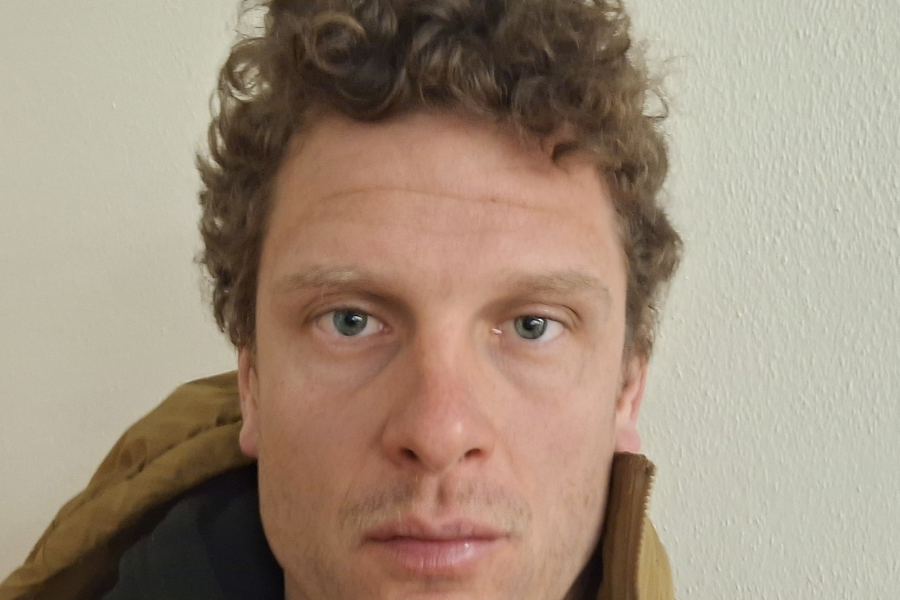
Gracjan Kraszewski
on Catholic Postmodern Fiction
An interview on Thermonuclear Mirth, maximalist fiction, comedy, apocalypse, the Palouse, St. Augustine, and the Catholic vision of reality.
Thermonuclear Mirth is your largest, most ambitious, and perhaps most demanding work. For readers who may find its size and structure intimidating, how would you describe what the novel is ultimately about?
→Reading is supposed to be fun. We forget that nowadays and the problem has only been exacerbated by social media. We read only to get information academically, or because we have to, or to learn some “life hack.” The first rule of reading should be enjoyment, that desire to find the hammock in summer or the cozy corner when it’s raining outside and so you cuddle up under a warm blanket with a cup of tea or hot cocoa and escape into a book. Maybe it’s only for an hour a day but you enjoy it and look forward to it. So, first and foremost TM is fun and I think its length is a gift to the ideal reader because he or she can keep coming back to it, day after day, take their time with it, and find some kind of recreation in the whole experience, that it’s a stress release/pick-me-up at the end of the day, something to look forward to. That’s my answer to anyone initially put off by its 900-page size.
As to what it’s about: it’s a futuristic novel set in the year 2100, in America, but decidedly not a science fiction. So much futuristic fiction is SCI-FI; this is not. First, it’s a parody on consumerism; second, an investigation into the very American “pursuit of happiness”; third, a journey of the soul, the vale of tears point A to Z movement from disbelief to belief, the whole process of that; fourth, an apocalyptic novel somewhat in the Benson Lord of the World mold; and, fifth and finally, a comedic — Dante’s definition, “happy ending” — and absurd look into what it means to be a Catholic today and that, by God’s grace, it all works out in the end. Don’t despair.
In the explanatory note to Thermonuclear Mirth, you call it a “maximalist novel,” not only in length but in ambition. Why did this book require such an expansive form — endnotes, digressions, multilingual play, comedy, apocalypse, and all?
→Because I think hard things are worth attempting and, if successfully pulled off, bring in a greater reward. There is nothing wrong with writing a perfectly polished and tight, 15,000-word/80-page novella. There is nothing wrong with attending a Univ of Iowa writer’s workshop and learning the ten important facets of a short story, etc. But I do not think enough writers want to take the risk of “going all out” because “what if I/it totally fails?”
One of my favorite things about Arouca Press is that you have been willing to let my stories have the full breathing space from the get-go. Your critiques, your suggestions, the editing process in sum, have made all the books I’ve published with you better, but I am so grateful that I have never felt hemmed in, things like “well, we can’t do that because no one does that.” That kind of attitude is one of the reasons why no one reads anymore. Every book looks like it was taken from a lab of the top ten tips collective and they are all 200–300 pages in length and no footnotes, no fun, basically the same stories and stock characters. It’s all become too assembly-line and monochromatic.
So, back to the original question: I don’t know if it requires such a form, but I do believe the story is so much better because it is found in this form, this style.
Some readers may find Thermonuclear Mirth your most inaccessible book, but also perhaps your most profound. Do you think difficulty can serve a literary or even spiritual purpose? What does the attentive reader receive from staying with a demanding work?
→Yes to both a literary and spiritual purpose, but certainly God willing, because whatever kind of true impact any work of art can make is in God’s hands and really out of the author’s control once the book is published.
Literary purpose: to unshackle new writers from the above-mentioned conventions of the profession that have become a prison. And to say to Catholic writers, specifically, you can engage with postmodernism in a way that not only does not betray the Faith but presents its timeless truths in a new and refreshing light. This point is the hoped spiritual purpose, that people of faith, or who are interested in religion, or maybe are 100% non-believers, finally encounter a “religious novel” that is nothing like any they have read before, a religious piece of art that is unlike every “faith-themed movie” they have seen before and so they maybe give religion a chance because “I’m a postmodern and I just loved this book for its style and comedy and irreverence but wait…the author’s main takeaway is be Catholic and attend Mass and pray the Rosary and receive and adore the Holy Eucharist?…ok, maybe I will consider that.”
Binx Bolling, protagonist of Walker Percy’s The Moviegoer, says whenever he hears anything about religion a curtain falls over his face, he is disinterested immediately. How do we reach these people who have “heard it all before”? New styles, like this.
The attentive reader’s reward is the experience itself. This book really is so fun, if you stick with it. Take it poolside, take it to the beach, immerse yourself in what is a kind of “film on page” experience. It’s hard for sure, but worth the effort.
Your fiction often joins the comic and the serious: absurdity, satire, metaphysics, friendship, grace, and the search for meaning. How do you see humor functioning in Catholic literature?
→It is essential. The things pertaining to God are of utmost seriousness: the liturgy, prayer, the pursuit of holiness. We should be very serious, earnest, to be good family members and people in general — to love God above all and your neighbor as yourself: greatest commandments, law and the prophets. We should take seriously the Matthew 25 warning about making the most of your talents.
All that being said, life is hilarious. People are clowns — I’m putting myself at the top of the list. We are so pathetic yet so profoundly loved by God. So much of everyday things — politics, patriotism, sports coaches’ motivational speeches, the economy, relationships of every stripe — are funny and need to be mocked and sometimes you’re laughing so as not to cry.
Dante’s Divine Comedy refers to comedy, of course, in the classical sense, a happy ending, as I mentioned above. But there is some modern meaning there too. There is a mirthful humor to so much of life and if you don’t see that, you’re either not looking, not perceptive, or taking the wrong things seriously.
20 Short Stories has been presented as an introduction to your “Catholic postmodern fiction” approach. What do you mean by that phrase, and how can fiction be both formally experimental and authentically Catholic?
→Yes, correct. It can be both because “authentically Catholic” is a theological postulation while “formally experimental” is a style. It’s like asking: how can a wall also be the color blue? Or, how can someone from Seattle also be named Sally and also like turtles? We are talking about different categories all the while.
My work is authentically Catholic, God willing, because it is orthodox and does not oppose anything the Church proposes and even actively promotes it. It is experimental in the vehicle by which the orthodoxy is delivered to the reader.
Several of the stories in 20 Short Stories are connected to Thermonuclear Mirth. Would you recommend that readers begin there before approaching the larger novel, or do you think Thermonuclear Mirth should be encountered directly on its own terms?
→Honestly, do whatever you want. I’d just jump right into TM. It’s my best — I honestly believe this — and most complete work. I like watching a whole movie knowing nothing about it, but some people like to read a bunch of reviews and watch the trailer first. So, sure, if you’re in the latter category, start with the bite-sized short stories and see if you like them and, if yes, go for the full book.
Seraphim and the Dust Plague has the form of a parable, dealing with both a literal plague and a more hidden spiritual or cultural malady. What were you trying to reveal about modern man through that story?
→That people are so stuck in their assumptions about life, about this world and the next, and so sure that their judgments of others are just that — well, let’s turn all of that on its head. The guy you are sure is a scumbag politician is not. The homeless man is not even homeless and sings like…well, maybe I’m saying too much now. The point of the story, reduced to level 0, is God alone knows and can judge and we cannot and do not know.
The Palouse appears repeatedly in your work, sometimes as setting, sometimes almost as a character. Why has this region become so central to your literary imagination?
→Two reasons. One, because I live here, that simple. My first novel, The Holdout, was set in Mississippi because I was then living in Mississippi. And Illinois appears a lot in TM because I lived in Urbana-Champaign for three years. So, being here, for sure counts for a lot.
But I do think it’s America’s most beautiful region and that I have some credibility in saying that, being originally from the East Coast — Pennsylvania, close to NYC — and then living in the South and Midwest. I’m not a huge Tolkien fan — sorry! Haha — by that I mean I like and respect him, just am not a Tolkien geek — sorry again — but think the Palouse is really just about as “shire” as a place gets: rolling hills and oceans of farmland, alpine forests and crystal blue lakes, snow and wind and incredible sunsets, all that. So, it’s a great canvas.
The Hippo Lectures began as live talks at the St. Augustine Catholic Center. How did the experience of speaking to a real audience shape the essays when they became a book?
→A lot. It forced me to stay on time, make a tight argument, and be able to “reach people.” I’m glad this is the first book we did together because, being largely non-fiction essays, it sets the foundation of my Catholic intellectual bona fides — I hope — before getting into all the aforementioned experimental stuff.
In The Hippo Lectures, you range widely across art, beauty, politics, athletics, beer, architecture, economics, film, scholasticism, and the saints. What do you think belongs within the scope of Catholic intellectual formation?
→Nothing does not belong, save sin. Sin, zero tolerance, and we must, God help us, be vigilant to be holy and uproot sin from our lives. But, like humor, we need to see the totality of things in their relation to God. Catholic means universal, as everyone knows and has heard a billion times. Fine, but do we tap into this? All that is good is from God and “useable” for Catholic thinkers, writers, artists, etc.
Even sin — which before I meant to avoid as in participating in or promoting sin — can show us the right path away from the wrong one. Think Flannery O’Connor. Her books are often 100% focused on sin, such as this to show people how to escape it and begin walking the paths to God, to salvation.
David Foster Wallace, probably my favorite writer — excepting only my father, Charles, a poet and translator but who has also written some novels and to whom I owe everything — is like this. His magnum opus, Infinite Jest, is all about sin, how sunk we are in sin and entertaining ourselves — literally in the book — to death. I wasn’t surprised when hearing he was considering Catholicism and twice was enrolled in RCIA — now OCIA, right? His book has that O’Connor style, the let-me-show-you-sin-then-maybe-you-consider-a-better-way quality.
Mark and Anna, Models uses postmodern literary techniques to present the wisdom of St. Augustine. Why did you choose such an unconventional form to communicate such ancient and enduring theological truths?
→Same reason as before. Interesting vehicle to tell timeless truths. “Here is straightforward book number 4,556 on Saint Augustine.” No, thank you. Binx Bolling curtain. But, wait, it’s about fashion models, two people you’re claiming are the “best looking couple in American history”? Their spiritual advisor is an old Irish priest named Fr. LeBron who can dunk and deadlift 700 lbs? There is a parody-homage to Virgil’s Aeneid throughout? ok, now you have my attention. That kind of thing.
Across your Arouca Press books, one finds recurring concerns with freedom, grace, beauty, work, local culture, friendship, and the search for transcendence. Looking at these works together, what do you hope readers will come to see more clearly about the Catholic vision of reality?
→Excellent question. Perfect Question. That God, alone, is the Good, the True, the Beautiful. All we do, by His grace, should be to become more good, more about the truth, more beautiful — in every definition of that term — so as to begin being happy now and, ultimately, be happy with Him in Heaven forever, for He alone can satisfy these and all the desires of our hearts. Reading books that themselves are good, true, and beautiful are but tools in this lifelong process. Pick them up, use them.
