-600x900.png "Church and Culture in the Middle Ages (350–814)")
-570x889.png "A History of the Catholic Church (Volume 2)")
A History of the Catholic Church (Volume 2)...
Reprint of Volume 2 of Dom Charles Poulet's classic work on Church History. It covers the beginning of the modern e...
View Book →



A study of the Catholic Church and medieval culture by Gustav Schnürer
In this penetrating study, the German Catholic historian Gustav Schnürer (1860–1941), examines one of the central questions in the history of Western civilization: what was the true relation between the Catholic Church and medieval culture? Refusing both the Enlightenment caricature of the Middle Ages as a time of barbarism and the opposite temptation to idealize them without qualification, Schnürer offers a measured account of the period in which the Church stood at the heart of social, intellectual, and cultural life.
For Schnürer, the Middle Ages were not merely the decline of classical antiquity, but the beginning of a new Western civilization. Modern nations, languages, literatures, cities, schools, and institutions took shape under the formative influence of the Catholic faith. In this sense, the medieval centuries may rightly be called the ecclesiastical period of Western civilization, an age in which the Church not only preserved what was noble in the ancient world, but also gave birth to new cultural forms.
Yet this work is no romanticized portrait. Schnürer also attends to the shadows of the medieval world, especially the danger that the civilization fostered by the Church could in turn tempt churchmen toward worldliness and obscure their supernatural mission. This volume remains a timely invitation to reconsider the foundations of the West at a moment when those foundations are again under question.
Church and Culture in the Middle Ages by Gustav Schnürer
Praise for Church and Culture in the Middle Ages
“Herbert Butterfield, in his crucial work of 1931 entitled The Whig Interpretation of History, showed that most contemporary historical studies in his day were crippled by a narrow, axiomatic—and one could easily even say ‘pre-woke’—ideological starting point. This prevented scholars from coming to grips both with the real depth of the treasures as well as the actual as opposed to invented problems of the entire non-liberal past. Butterfield’s book was a powerful aid to improving historical writing to such a degree that it is much more likely in our time than in his own to encounter accurate treatment, even on the part of secular-minded academics, of many targets of the closed, liberal, Whiggish mind, the Catholic heritage chief among them.
Gustav Schnürer’s Church and Culture in the Middle Ages, originally published in 1924, illustrates exactly the kind of historical work that insightful critics like Butterfield hoped to see blossom in the Anglo-Saxon world—because this German scholar studied with ‘ears to hear and eyes to see.’ He heard what medieval men themselves said was important to life and looked at what they accomplished in consequence. And what this meant is that his non-ideological researcher’s skill enabled him clearly to outline for us the electrifying effect of the Catholic Faith and the Mystical Body of Christ on the great breadth of human spiritual, intellectual, artistic, and socio-political achievement. Everyone can gain from diving into the labor of this continental harbinger of the work done later in the English-speaking world by men like Christopher Dawson, whose truly open minds, to paraphrase Chesterton, always ‘bite down on something solid.’”
— Dr. John Rao
D. Phil., Oxford; Emeritus Professor of European History at St. John’s University, New York; Director of the Roman Forum; former Chairman of Una Voce America
Be the first to write a review for this product.
Reprint of Volume 2 of Dom Charles Poulet's classic work on Church History. It covers the beginning of the modern e...
View Book →-570x889.png "A History of the Catholic Church (Volume 1)")
Reprint of Volume 1 of Dom Charles Poulet's classic work on Church History. It covers the beginning of the medieval...
View Book →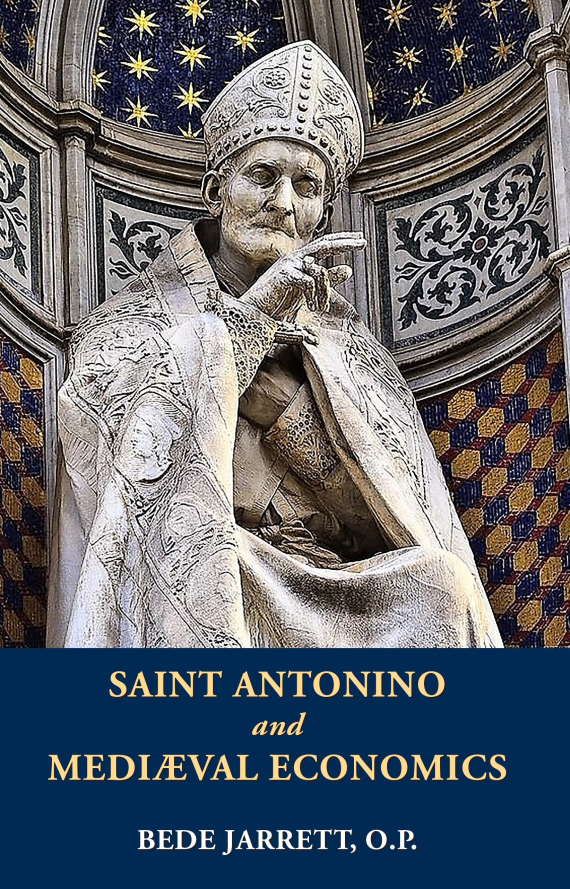
✦ ✦ XIII Books · An Imprint of Arouca Press Catholic social thought before modern econ...
View Book →
The task of condensing the History of the Church within a few hundred pages is a delicate one. We have undertaken it in ...
View Book →
Receive updates on new releases, special offers, and notable developments from Arouca Press.